

Micturition, or urination, is the process by which urine is expelled from the urinary bladder through the urethra to the outside of the body. It is an essential function of the excretory system that helps remove metabolic wastes, excess water, and dissolved substances from the body. This process plays a vital role in maintaining fluid balance, electrolyte balance, and overall homeostasis.
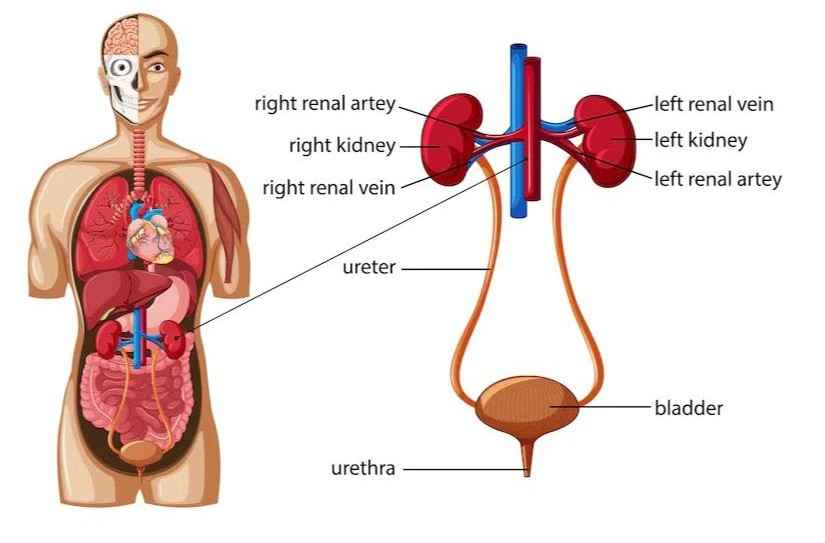
Organs Involved in Micturition
The human excretory system consists of:
- Kidneys (formation of urine)
- Ureters (transport urine)
- Urinary bladder (stores urine)
- Urethra (expels urine)
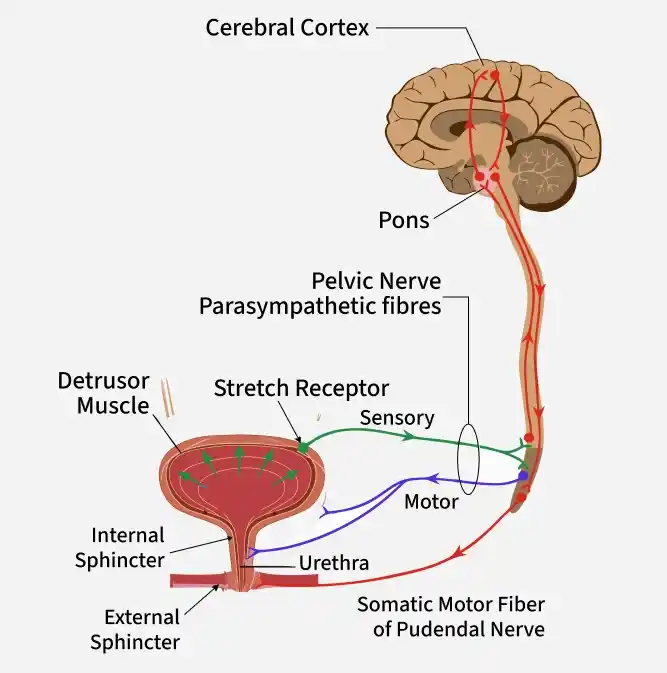
Urinary Bladder and Sphincters: The urinary bladder is a muscular sac that temporarily stores urine. It has two types of sphincters: the internal urethral sphincter (involuntary control) and the external urethral sphincter (voluntary control)
Mechanism of Micturition
The process of micturition involves a complex interaction between the urinary bladder, the nervous system, and the urethral sphincters.
1. Filling of the Urinary Bladder
- Urine continuously enters the urinary bladder from the kidneys through the ureters.
- As the volume of urine increases, the bladder wall becomes stretched.
- Stretch receptors present in the wall of the bladder detect this distension and become activated when the bladder contains approximately 300–400 millilitres of urine.
2. Initiation of the Micturition Reflex
- The stimulation of stretch receptors generates nerve impulses that travel to the sacral region of the spinal cord through sensory neurons.
- The spinal cord processes these signals and initiates a reflex response known as the micturition reflex.
- This reflex is an autonomic spinal reflex that helps coordinate the emptying of the bladder.
3. Contraction of the Detrusor Muscle
- As part of the micturition reflex, parasympathetic nerve impulses are sent from the spinal cord to the urinary bladder.
- These impulses cause the detrusor muscle of the bladder wall to contract.
- Contraction of the detrusor muscle increases the pressure inside the bladder and pushes urine toward the urethra.
4. Relaxation of the Internal Urethral Sphincter
- The internal urethral sphincter is composed of smooth muscle and is under involuntary control.
- During micturition, this sphincter relaxes automatically, allowing urine to move from the bladder into the urethra.
5. Relaxation of the External Urethral Sphincter
- The external urethral sphincter consists of skeletal muscle and is under voluntary control.
- Although the micturition reflex prepares the bladder for emptying, the final release of urine occurs only when the external urethral sphincter is consciously relaxed.
- This voluntary control allows individuals to delay urination until an appropriate time and place.
6. Expulsion of Urine
- When both urethral sphincters are relaxed and the detrusor muscle contracts, urine flows through the urethra and is expelled from the body.
- After the bladder is emptied, the detrusor muscle relaxes, the sphincters close, and the bladder begins to fill again.
Importance of Micturition
Micturition is essential for maintaining the normal functioning of the excretory system and overall health. Its importance includes:
- Removal of metabolic waste products from the body.
- Elimination of excess water and salts.
- Maintenance of fluid and electrolyte balance.
- Prevention of overdistension of the urinary bladder.
- Maintenance of internal homeostasis.
- Support of normal kidney function.