

A Test Plan Template is a standardized document that provides a structured format for planning software testing activities. It helps define the testing scope, objectives, strategy, resources, schedule, and deliverables, ensuring consistency and effective test management throughout the project.
- Provides a standardized structure for creating test plans.
- Ensures all important testing activities are planned and documented.
- Improves communication, traceability, and overall testing quality.
Test Plan Template Format
Below is a simple and easy-to-understand test plan template format that can be customized according to the project requirements.
- Project Information: Basic details like project name, version, and prepared by.
- Test Objectives: Defines the goals and purpose of testing.
- Scope of Testing: Includes in-scope and out-of-scope features.
- Test Strategy: Describes testing approach, types, and tools used.
- Test Environment: Specifies hardware, software, and network setup.
- Test Deliverables: Lists outputs like test cases, reports, and defect logs.
- Test Schedule: Defines timelines, milestones, and deadlines.
- Resources: Identifies testers, developers, and required tools.
- Risks & Mitigation: Lists possible risks and solutions to handle them.
- Entry & Exit Criteria: Conditions to start and end testing.
- Approvals: Sign-off from stakeholders or QA leads.
Test Plan Creation Process
Creating an effective test plan involves defining the testing scope, objectives, strategy, resources, and schedule to ensure systematic and successful testing.
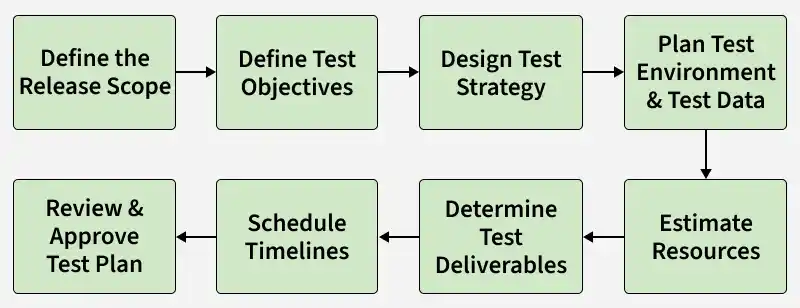
- Define the Release Scope: Identify the features, modules, and functionalities to be tested. Clearly specify what is included and excluded from the current release.
- Define Test Objectives: Set the goals of testing, such as validating functionality, detecting defects, and ensuring the application meets business requirements.
- Design Test Strategy: Define the overall testing approach, including testing types, techniques, tools, and execution methods to be used.
- Plan Test Environment and Test Data: Prepare the required hardware, software, network, and test data to ensure testing can be executed successfully.
- Estimate Resources: Identify the required team members, roles, tools, and effort needed to complete the testing activities.
- Determine Test Deliverables: List the documents and outputs to be produced during testing, such as test cases, defect reports, and test summary reports.
- Schedule Timelines: Create a testing schedule with milestones and deadlines for planning, execution, defect fixing, and reporting.
- Review and Approve Test Plan: Review the completed Test Plan with stakeholders and obtain formal approval before testing begins.
Risks and Mitigation Plan
The Risks and Mitigation Plan section of a Test Plan identifies possible problems that may affect the testing process and defines actions to reduce or avoid their impact.
| Risk | Mitigation |
|---|---|
| Unstable application build | Coordinate with developers and use stable builds for testing. |
| Insufficient test data | Prepare and validate test data before execution. |
| Tight project deadlines | Prioritize critical test cases and plan realistic schedules. |
| Resource unavailability | Maintain backup resources and redistribute work when needed. |
| Test environment issues | Verify and stabilize the testing environment before execution. |
Responsibility for Preparing Test Plan
The Test Manager or QA Lead is responsible for preparing the Test Plan.
- Defining the testing scope and objectives.
- Selecting the testing strategy.
- Estimating resources and schedules.
- Identifying project risks.
- Coordinating with developers, testers, and stakeholders.
- Reviewing and obtaining approval for the final Test Plan.
Test Planning in a Test Management Tool
Using a test management tool can streamline the test planning process by allowing teams to:
- Milestones Track important deadlines and progress
- Collaboration Share the test plan with all stakeholders and receive feedback in real time
- Reporting Automatically generate reports on testing progress, defects, and coverage
Test Lifecycle Activities
The Test Lifecycle consists of activities performed before, during, and after test execution to ensure effective planning, execution, and reporting of the testing process.
- Before Testing: Prepare and review the Test Plan, Test Cases, Test Data, and Test Environment to ensure everything is ready for execution.
- During Testing: Execute Test Cases, record Defects, perform Defect Retesting when fixes are available, and monitor Testing Progress.
- After Testing: Prepare the Test Summary Report, update Defect Logs, obtain Test Sign-off, and archive testing artifacts for future reference.
Limitations of a Test Plan
- Creating a detailed test plan can be time-consuming.
- Frequent requirement changes require continuous updates.
- Unexpected scenarios may not be covered completely.
- The effectiveness of the plan depends on stable requirements.
- Large projects can make the document lengthy and difficult to maintain.
- Teams may not always follow the plan strictly due to changing priorities.
- Traditional test plans are less flexible in rapidly changing Agile environments.