

Regulations Acceptance Testing (RAT) is a software testing approach used to verify whether an application complies with legal, regulatory, and industry-specific requirements before release. It ensures that the software follows required standards, policies, and compliance guidelines of the business domain.
- Verifies that the software meets regulatory and legal requirements.
- Commonly used in regulated industries such as banking, healthcare, insurance, and finance.
- Helps prevent compliance failures, legal risks, and business issues after deployment.
Key Areas Covered in Regulations Acceptance Testing
Regulations Acceptance Testing focuses on validating different compliance areas to ensure that the software meets required standards and regulations.
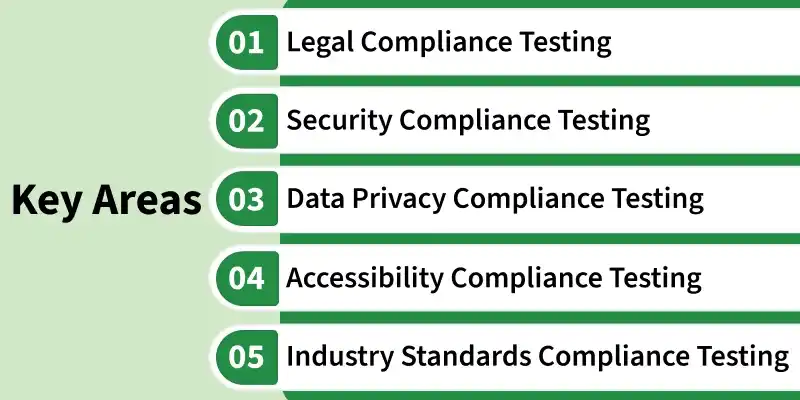
- Legal Compliance Testing: Ensures that the software follows applicable laws, government rules, and legal requirements.
- Security Compliance Testing: Verifies that the application follows security standards for protecting systems, user access, and sensitive information.
- Data Privacy Compliance Testing: Checks whether personal and confidential data is collected, stored, processed, and protected according to privacy regulations.
- Accessibility Compliance Testing: Ensures that the software is accessible to users with disabilities and follows accessibility guidelines.
- Industry Standards Compliance Testing: Confirms that the application follows standards and compliance requirements specific to industries such as healthcare, banking, and finance.
Process of Regulations Acceptance Testing (RAT)
The RAT process involves validating whether the software meets all required compliance standards before production release.
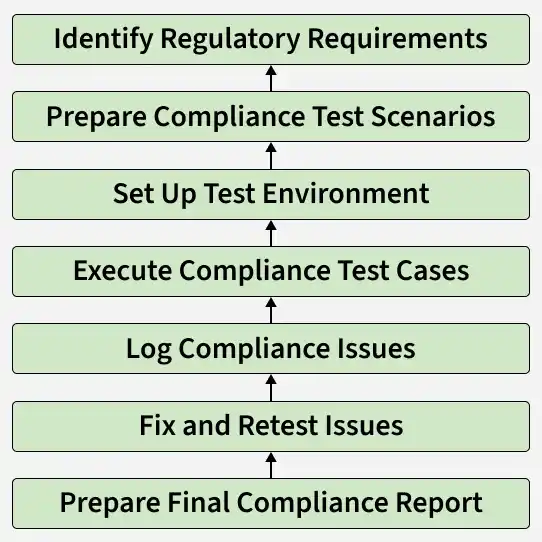
- Identify Regulatory Requirements: Collect all legal, regulatory, security, privacy, and industry-specific requirements that the software must comply with.
- Prepare Compliance Test Scenarios: Create test scenarios and test cases to verify whether the application meets the identified compliance requirements.
- Set Up Test Environment: Configure a proper test environment that supports compliance testing and required validation conditions.
- Execute Compliance Test Cases: Run the compliance test cases to check whether the software follows all required regulations and standards.
- Log Compliance Issues: Record any compliance gaps, failures, or violations found during testing for further analysis and correction.
- Fix and Retest Issues: Resolve the identified compliance issues and retest the software to confirm that the fixes are working properly.
- Prepare Final Compliance Report: Document the test results, compliance status, and final observations for approval and release decisions.
Types of Regulations Checked in RAT
Regulations Acceptance Testing verifies whether software complies with different categories of external laws, standards, and regulatory requirements based on the business domain and applicable rules.
- Legal and Government Regulations: Rules and laws issued by legal or government authorities that the software must follow.
- Data Protection and Privacy Regulations: Requirements related to the collection, storage, processing, and protection of personal or sensitive user data.
- Security Standards and Regulations: Standards that define security controls, authentication, access management, and protection against data breaches.
- Accessibility Standards: Guidelines and regulations that ensure the software is usable by people with disabilities.
- Industry-Specific Regulations: Compliance requirements that apply to sectors such as banking, healthcare, insurance, and finance.
Advantages of Regulations Acceptance Testing
- Identifies compliance gaps before the software is deployed.
- Reduces rework caused by missing or incorrect regulatory requirements.
- Improves software reliability and trust among users and stakeholders.
- Provides documented evidence of compliance for audits and verification.
- Supports safer release decisions in regulated business domains.
Limitations of Regulations Acceptance Testing
- Time-consuming because validating multiple regulations requires detailed checking and documentation.
- Requires domain knowledge and understanding of legal, regulatory, and compliance requirements.
- Regulations may change frequently, requiring regular updates to test cases and compliance checks.
- Increases testing cost due to additional reviews, documentation, and expert involvement.
- Cannot guarantee complete compliance if some requirements are missed or interpreted incorrectly.