

Logistics is an essential business function that ensures the smooth flow of goods, services, and information from the point of origin to the point of consumption. It involves careful planning, execution, and control of activities such as transportation, warehousing, and inventory management to make sure products reach the right place, at the right time, and in the right condition. Logistics acts as the backbone of the supply chain by connecting different stages of production and distribution, helping businesses meet customer demands efficiently while controlling costs. Effective logistics management ensures continuity in operations and enables a seamless movement of materials and information across the entire supply chain.
Functions of Logistics
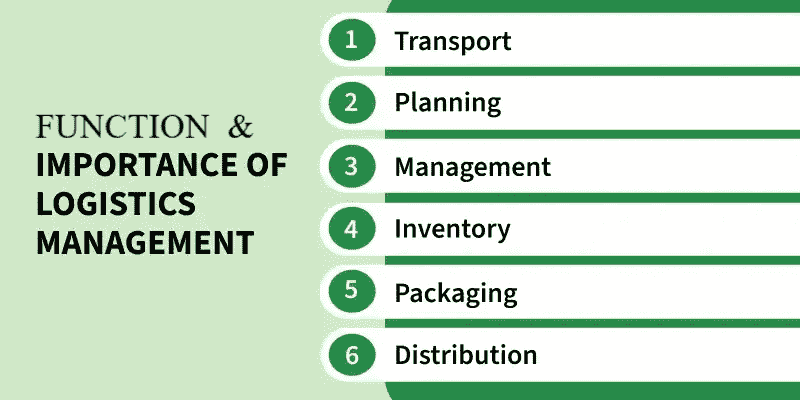
Transportation: Process of moving goods from the place of production to the place of consumption. It involves selecting suitable modes such as trucks, trains, ships, or airplanes. The main objective is to ensure timely delivery of goods in good condition while balancing cost, speed, and reliability.
Warehousing: The storage of goods and materials until they are needed for production or sale. Warehouses help maintain proper inventory levels and ensure smooth supply chain operations. They act as a buffer by storing goods in advance and releasing them according to demand, thereby preventing shortages or excess stock..
Inventory Management: Inventory management is keeping tabs on stock levels. It's about knowing how much of a product is available, where it is, and when it needs restocking. Effective inventory management prevents having too much stock, which reduces unnecessary holding costs and ensures there's enough stock to meet customer demands. It's a balance between avoiding running out and minimizing excess.
Order Processing: Once a customer places an order, the logistics system gets going with order processing. This involves getting and managing customer orders, checking product availability, and coordinating the fulfilment process. Getting order processing right is crucial for meeting customer expectations and making sure the right products are sent to the right places.
Packaging: Packaging isn't just about putting things in boxes; it's a vital part of logistics. Good packaging protects goods during transport and storage, preventing damage or deterioration. It also includes labelling, making sure products are easily recognizable and providing info for accurate order processing. Packaging ensures products reach their destination in good condition.
Distribution: Distribution is the last step, getting products to the end-users. It involves coordinating transport, planning routes, and making sure goods get to customers on time. Distribution is about the final stretch, making sure the right products are in the right place when they're needed.
Importance of Logistics
Logistics is crucial for several reasons, playing a pivotal role in the success and efficiency of businesses.
Timely Delivery: Logistics ensures that products reach their intended destinations on time. This timely delivery is crucial for meeting customer expectations and maintaining satisfaction. Whether it is raw materials arriving at a production facility or finished goods reaching the end-user, timely delivery is vital.
Cost Efficiency: Efficient logistics management contributes to cost savings for businesses. By optimizing transportation routes, managing inventory levels, and streamlining processes, logistics helps reduce operational costs. This allows businesses to stay competitive and potentially offer more attractive prices to customers.
Effective Resource Utilization: Logistics involves careful planning and coordination of resources such as transportation, warehousing, and personnel. Efficient resource utilization ensures there's no unnecessary waste of time, money, or manpower. It helps minimize idle time, reduce excess inventory, and maximize overall productivity.
Customer Satisfaction: Logistics directly impacts customer satisfaction by ensuring products are available when and where customers need them. A reliable logistics system enhances the overall customer experience, fostering trust and loyalty. Delays or disruptions in logistics can lead to dissatisfaction and potential loss of customers.
Global Reach and Market Expansion: In today's interconnected world, logistics facilitates global trade and market expansion. It enables businesses to source materials globally, reach new markets, and serve a diverse customer base. A well-organized logistics network is crucial for businesses engaged in international trade, helping navigate complex supply chains and diverse regulatory environments.
Types of Logistics
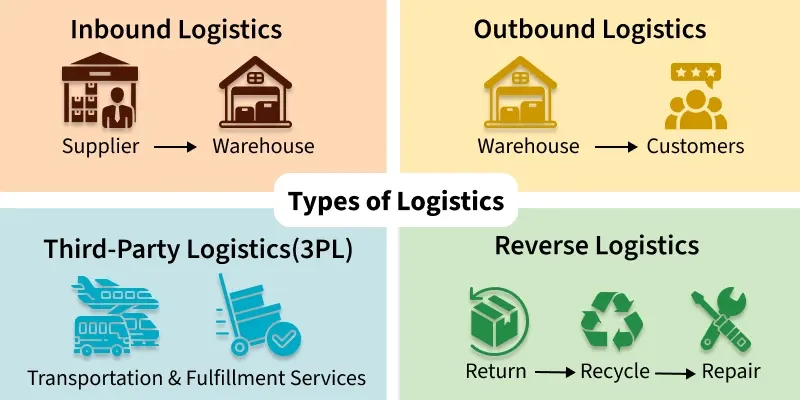
Inbound Logistics: Inbound logistics is like the welcoming committee for materials and goods. It's all about managing the movement of these items from suppliers to the production facility. This includes everything from coordinating shipments, handling transportation, and organizing the storage of raw materials.
Outbound Logistics: Outbound logistics takes over once products are ready to leave the production facility and head to their final destination – the end-user. This phase involves coordinating the movement of finished goods, selecting the most efficient transportation methods, and ensuring products reach customers promptly.
Third-Party Logistics (3PL): Think of third-party logistics as calling in the experts. Instead of handling all logistics in-house, businesses can outsource these activities to third-party providers. These experts take care of transportation, warehousing, and other logistical tasks, allowing the business to focus on what it does best.
Reverse Logistics: Reverse logistics deals with the backward journey of goods, going from the end-user back to the manufacturer. This can involve returns, recycling, or repairing products. It's like a return ticket for goods that didn't quite meet expectations or need a second chance. Managing reverse logistics efficiently is crucial for minimizing waste and maximizing the value of products.
In essence, these different types of logistics cover the entire lifecycle of products, from their arrival as raw materials to their journey through production and distribution, and even their return journey if needed. Each type plays a specific role in ensuring goods move smoothly through the supply chain, meeting both business and customer needs.
Examples of Logistics
- Shipping Goods: One of the most common examples of logistics is shipping goods from the manufacturer to distributors or retailers. This involves careful planning of transportation methods, route optimization, and coordination to ensure products reach their destinations efficiently and on time.
- Cross-Border Logistics: International trade involves complex logistics, including customs clearance, documentation, and coordination with various transportation modes. Efficient cross-border logistics is crucial for the smooth movement of goods between countries.
- Supply Chain Collaboration: Collaboration across the supply chain is a logistical example where multiple parties work together for seamless operations. This can include suppliers, manufacturers, distributors, and retailers sharing information to optimize the flow of goods and reduce lead times.
- E-commerce Fulfilment: In the era of online shopping, logistics is crucial for e-commerce businesses. From processing customer orders and packaging products to arranging for last-mile delivery, a well-organized logistics system is essential for timely and accurate fulfilment.
Logistics in Business
In business, logistics is the backbone that ensures everything moves smoothly from the start to the finish. It's the art of planning, executing, and controlling the flow and storage of goods, services, and information. Picture it as the behind-the-scenes manager, making sure products get from where they are produced to where they are needed, all in a timely and cost-effective manner. From ordering raw materials to delivering finished products to customers, logistics handles the entire journey. It involves coordinating transportation, managing inventory, processing orders, and making sure everything is packaged and delivered to the right place. In simpler terms, logistics in business is the organized effort that keeps the wheels turning, making sure products are available when and where they're needed.
Logistics V/S Supply Chain Management
Basis | Logistics | Supply Chain Management |
|---|---|---|
| Focus | Logistics ensures goods move and store well. | Supply Chain Management oversees the whole process, from buying materials to delivering final products. |
| Activities | We handle logistics tasks like moving, storing, and processing orders. | Supply Chain Management coordinates all the necessary tasks, from making products to reaching customers. |
| Goal | The main goal of logistics is to make sure products move smoothly. | The main goal of logistics is to make sure products move smoothly. |
| Scope | Logistics often deals with a specific part of the supply chain or a single organization. | Supply Chain Management involves working together with different entities like suppliers, manufacturers, and distributors. |
| Position | Logistics is a part of the broader concept of Supply Chain Management. | Supply Chain Management covers everything in the supply chain, providing a comprehensive approach. |