

The lac operon is a group of genes in the bacterium Escherichia coli that controls the uptake and breakdown of lactose (milk sugar). The name Lac operon actually stands for the lactose operon.
The lac operon works only when the nutrient source lacks glucose and has only lactose, as it takes more steps to be metabolized. The three structural genes are lacZ, lacY, and lacA, along with the CAP site, promoter region, and operator region, which regulate the whole process.
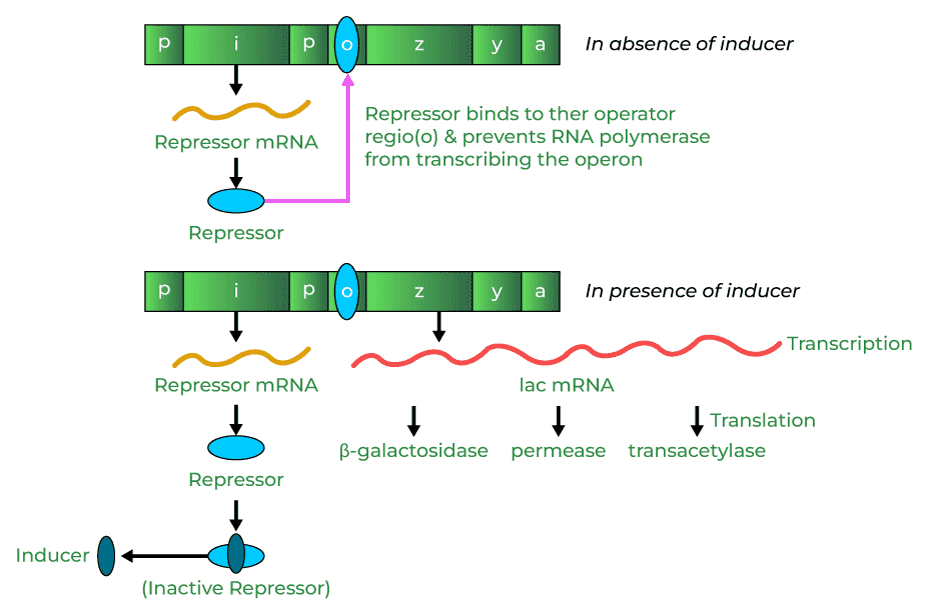
A group of genes having a single promoter found in bacterial species like E. coli and some species of enteric bacteria that help them to transport and metabolize lactose and derive energy from it when there is no glucose present for utilization is called the lactose operon.
Features of the Lac Operon
The lac operon is a set of genes found in some bacterial species that are responsible for the metabolism of lactose, a sugar found in milk.
- The lac operon consists of three structural genes: lac Z, lac Y, and lac A. These genes encode for the enzymes β-galactosidase, lactose permease, and transacetylase, respectively.
- The lac operon also contains a regulatory gene, lac I, that codes for the lac repressor protein. The repressor binds to the operator region of the operon and prevents transcription of the structural genes.
- The lac operon is inducible, meaning that transcription of the structural genes is turned on in the presence of lactose. Lactose binds to the lac repressor protein, causing a conformational change that releases the repressor from the operator region.
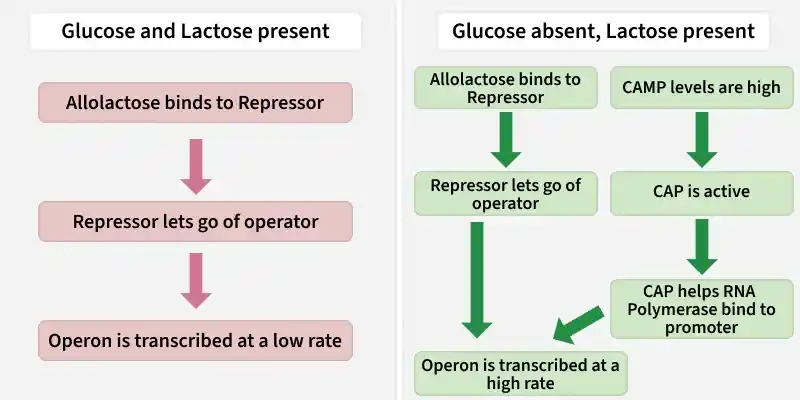
- The lac operon is subject to catabolite repression, which means that the presence of glucose inhibits the transcription of the structural genes, even in the presence of lactose. This is because glucose is a preferred energy source for bacteria.
- The lac operon is regulated by both positive and negative control. The catabolite activator protein (CAP) binds to a site upstream of the promoter region and enhances transcription when glucose levels are low.
- The lac operon also undergoes attenuation, a mechanism that allows for fine-tuning of gene expression. Attenuation is based on the ability of the mRNA to fold into alternative stem-loop structures that affect transcription elongation.
- Mutations in the lac operon can lead to changes in the regulation of lactose metabolism, which can have a significant impact on the survival and fitness of bacteria in different environments.
Structure of Lac Operon
A lac operon is a group of genes found in bacteria that play a role in metabolizing lactose, a type of sugar present in milk, in the absence of glucose, which is the primary source of energy for the majority of living cells.
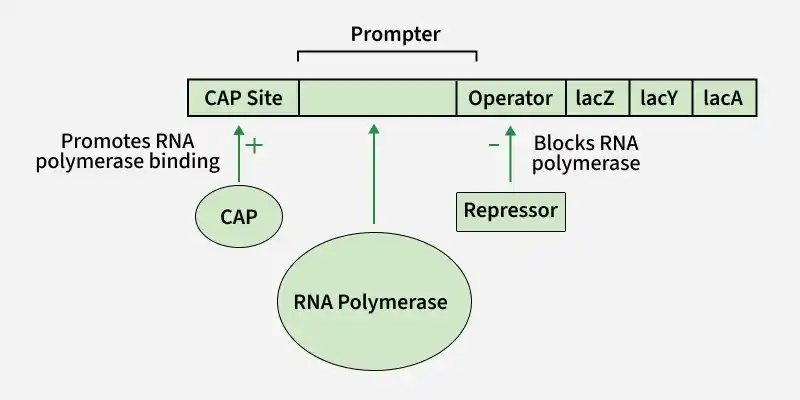
- This operon consists of three structural genes: lacZ, lacY, and lacA, along with a regulatory gene that controls their expression.
- The lac Z gene is responsible for producing beta-galactosidase, an enzyme that breaks down lactose into glucose and galactose.
- The lacY gene codes for lactose permease, which is a membrane protein that transports lactose into the bacterial cell.
- The lacA gene encodes for a transacetylase enzyme, which assists the beta-galactosidase enzyme.
- The regulatory genes encode for the repressor proteins.
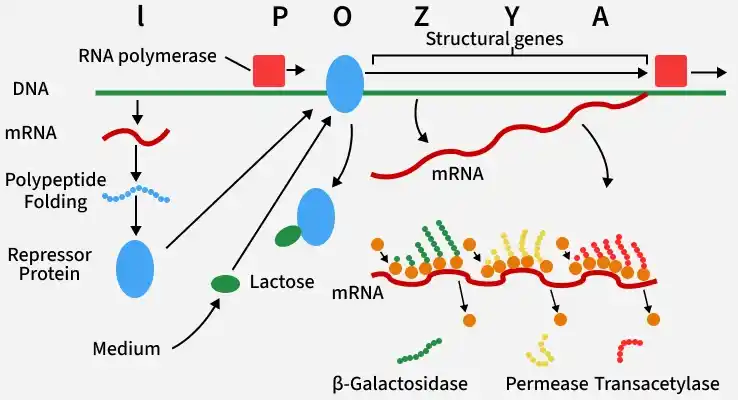
- The lac I gene produces the lac repressor protein, which binds to the operator region of the operon and prevents the transcription of the structural genes. The presence of lactose in the environment leads to the production of an inducer molecule called allolactose, which binds to the Lac repressor and causes it to release from the operator. This allows RNA polymerase to bind to the promoter region of the operon and initiate transcription of the structural genes.
- The Catabolite Activator Protein (CAP) binding site, a positive regulatory site, is located upstream of the promoter region where the CAP binds to promote transcription by helping the RNA Pol enzyme to bind to the promoter.
- The operator, a negative regulatory site located between the promoter and structural genes, is the site where lac repressor protein binds.
- The promoter region is the location where the RNA polymerase enzyme binds.
Regulation of the Lac Operon
The regulation of the Lac Operon explains how bacteria control the expression of genes required for the metabolism of lactose. This mechanism was explained by François Jacob and Jacques Monod while studying Escherichia coli. The lac operon works through an inducible system, meaning it is normally turned off but becomes active in the presence of lactose.
Regulation in the Absence of Lactose
When lactose is not available, the repressor protein produced by the regulator gene binds to the operator region. This blocks RNA polymerase from transcribing the structural genes, and therefore the enzymes required for lactose digestion are not produced.
Regulation in the Presence of Lactose
When lactose enters the cell, it is converted into allolactose, which acts as an inducer. The inducer binds to the repressor protein and changes its shape so that it cannot bind to the operator. As a result, RNA polymerase can move along the DNA and transcribe the structural genes. The enzymes needed to break down lactose are then produced. The lac operon has lac Z, lac Y, and lac A as structural genes that code for functional enzymes.
Significance of the Lac Operon
- The lac operon is an example of an inducible operon, meaning that it is normally switched off but can be turned on in the presence of a specific substrate.
- It demonstrates how cells regulate gene expression depending on environmental conditions.
- This model has helped scientists understand many mechanisms of genetic control in both simple and complex organisms.
- Knowledge of the lac operon is widely used in biotechnology and genetic engineering for controlling gene expression in laboratory experiments.